How do you stop no-shows? A deposit at booking, reminders that make forgetting hard, and a reschedule path that is easier than ghosting. None of it is clever. All of it works — because most no-shows are not malice, they are drift: booked three weeks out, life moved, nothing at stake, and cancelling felt awkward, so they just did not come.
What does a no-show actually cost?
Run it on one example. A bay booked for a $2,000 PPF day earns zero instead — and unlike a lost lead, the slot cannot be resold at 9am when nobody walks in. Add the material that was staged, the tech standing idle, and the customer you turned away from that slot last week. Two of those a month is real money by year-end. The logic is the same as the lead-loss math: small leaks, multiplied by twelve.
Why do customers no-show?
Because the booking was weeks ago, nobody reminded them, nothing was at stake, and backing out felt awkward — so silence was easier. Read that list again: every item is fixable by process. None of it requires better customers.
Deposits don’t scare customers away. They scare tire-kickers away.
The boring fixes that work
- Deposit at booking. Collected on the spot, applied to the job. A booking with money on it survives; a bare calendar entry does not.
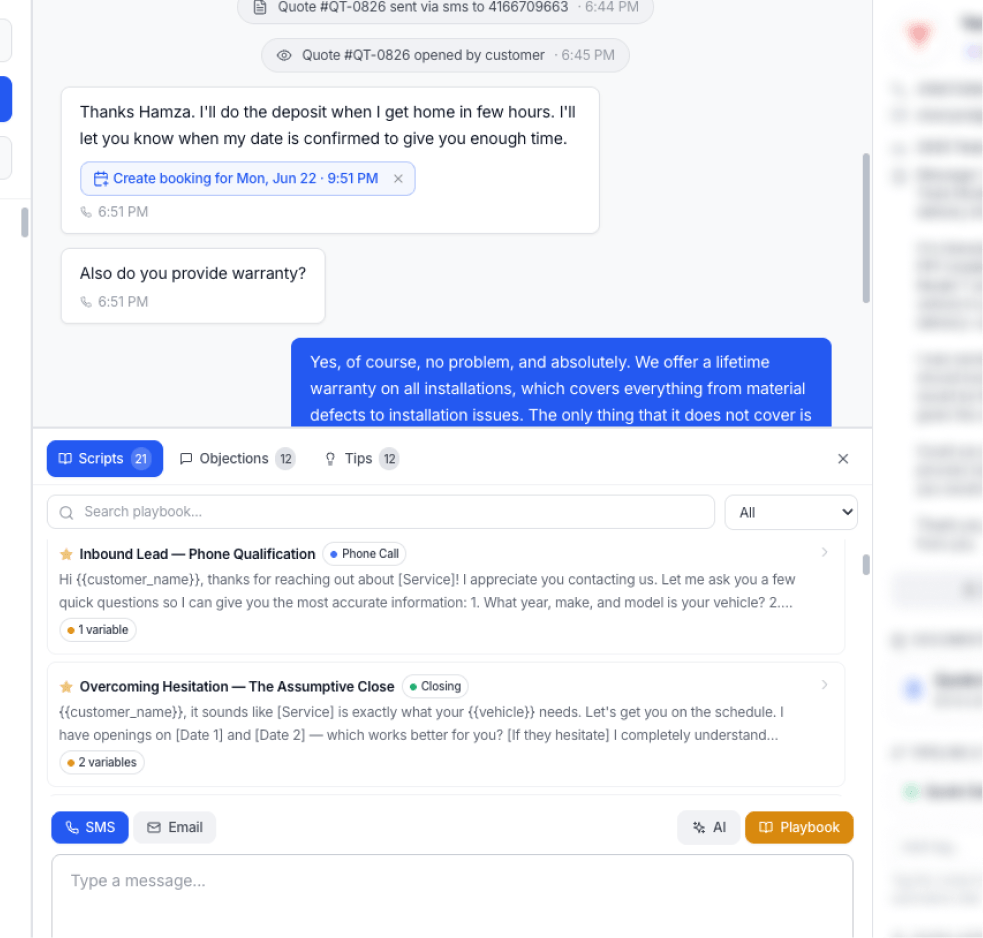
- A reminder cadence. Confirmation at booking, day-before, day-of — automatic, every time.
- One-tap rescheduling. Make changing the appointment easier than ignoring it, and drift turns into a moved booking instead of an empty bay.
Bookings that survive until install day.
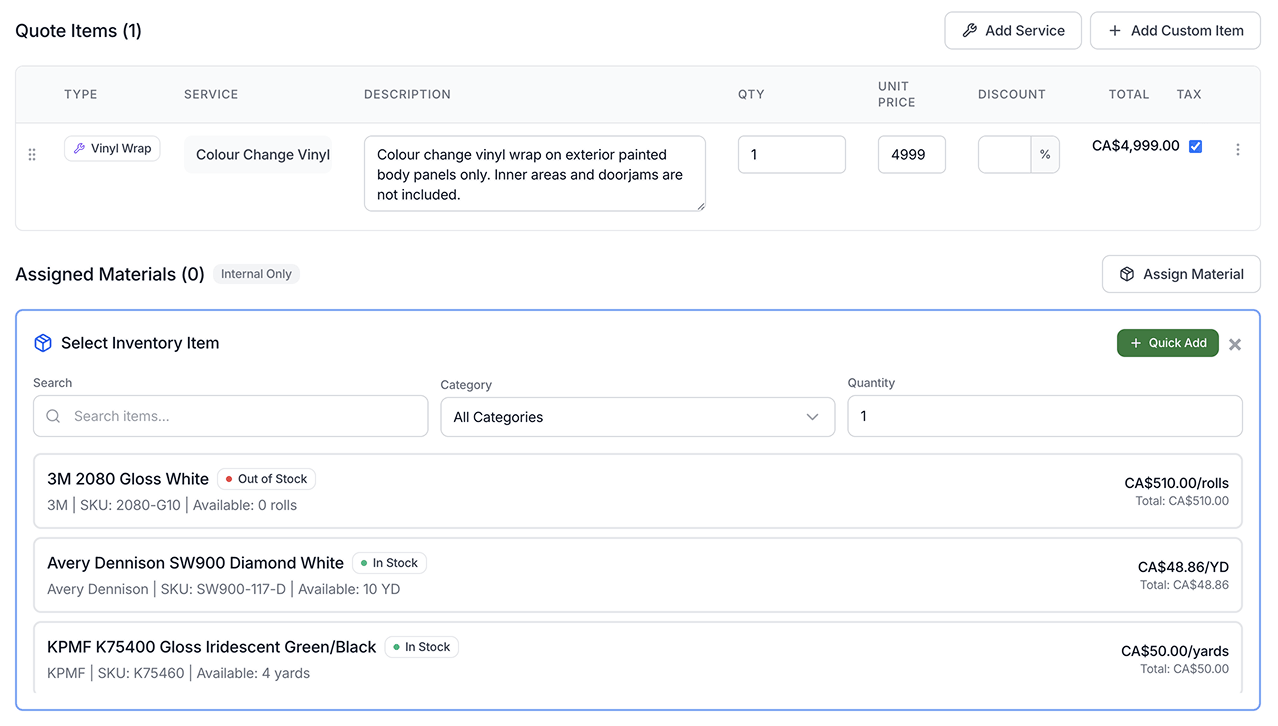
Calendar & Bookings takes deposits at booking, runs the reminder cadence automatically, and gives customers a self-serve way to reschedule.
See Calendar & Bookings →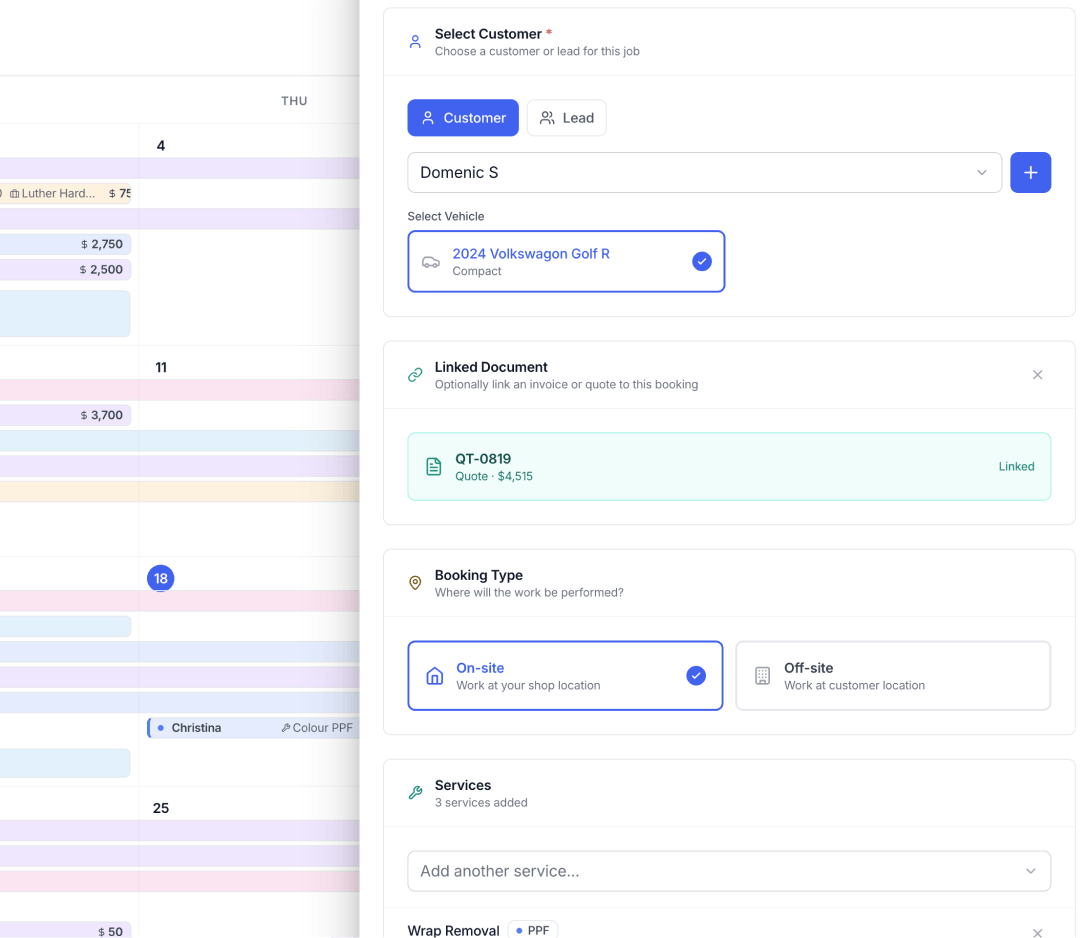
Deposits also solve the paperwork half of this: money collected up front, shown against the balance on the invoice. If yours do not, start with what belongs on a wrap shop invoice.