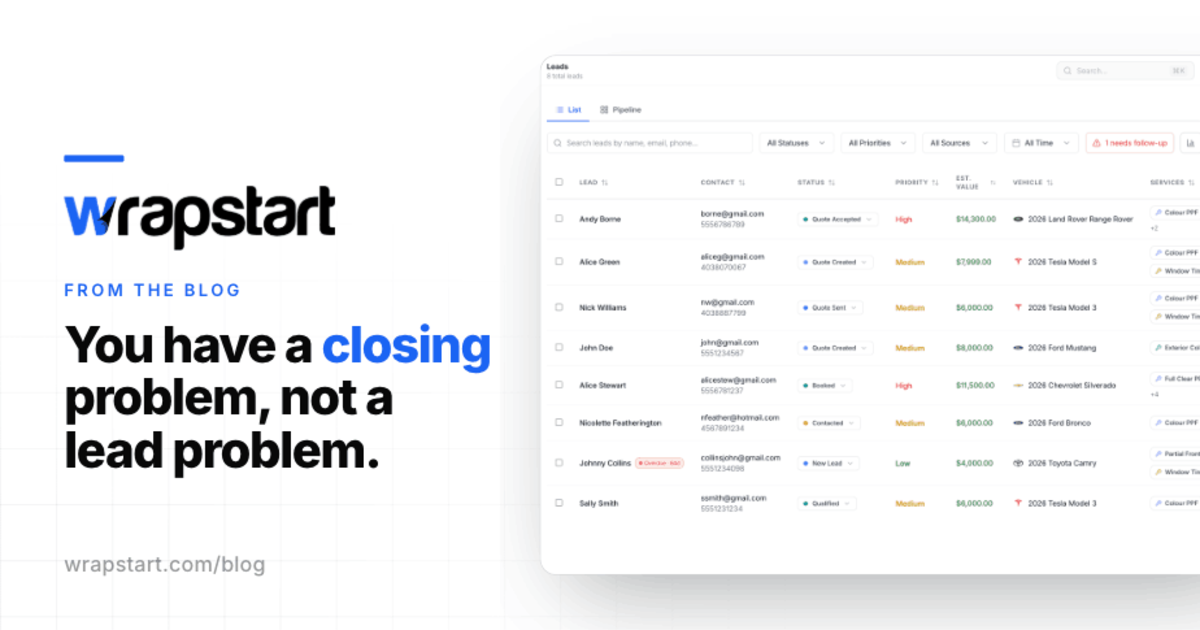
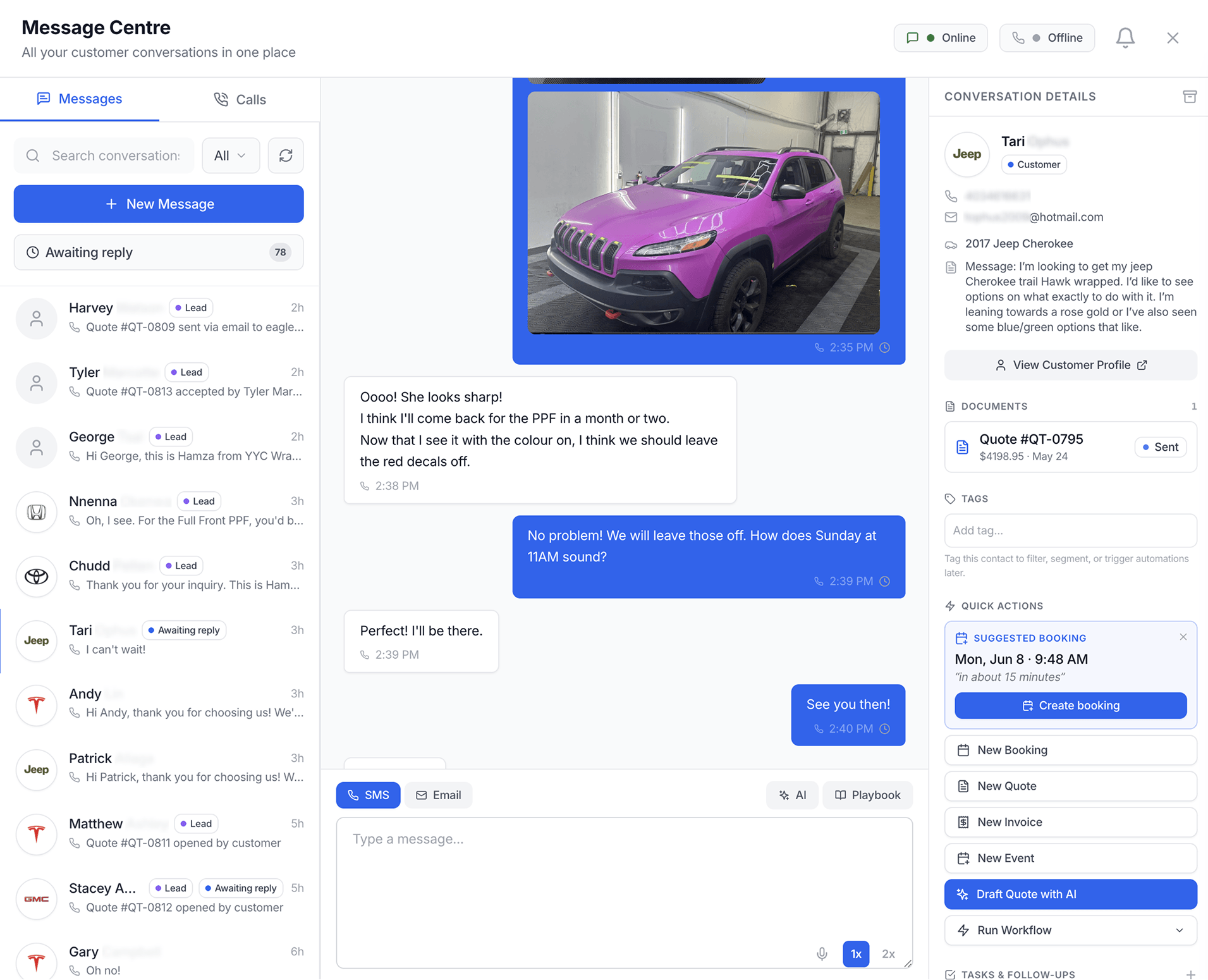
How many times should you follow up on a quote? More than feels comfortable — spaced out over about two weeks, with something useful in every message. Most shops send the quote and go silent, waiting for the customer to move. But a customer sitting on a $3,000 decision reads your silence as indifference — and books with whoever stayed in the conversation.
Why does "just checking in" feel so bad?
Because it gives nothing and asks everything. "Just following up!" contains no new information; it transfers all the work to the customer. That is why it feels pushy to send — and easy to ignore. The fix is not following up less. It is making every touch worth receiving.
Every follow-up should give something, not just ask.
A cadence that doesn’t feel pushy
- Day 0 — the quote, plus a question. End with something to respond to: "Want me to price the two-tone option as well?"
- Day 1–2 — a value touch. An install slot that opened, a material sample photo, an answer to the question they asked in person.
- Day 5 — proof. Photos of a similar build you have done, or a recent review from a job like theirs.
- Day 10 — the open door. "Happy to hold a slot for next month if the timing works better — no pressure either way."
- After that — the long tail. "Not now" is not "no." A low-frequency check-in keeps you the obvious call when timing changes.
When do you stop?
When they say no. An actual "we went another way" ends the cadence — thank them and mean it. Everything short of that is a timing problem, and timing problems are what the long tail is for.
Turn follow-up into a playbook, not a memory test.
The Sales Playbook gives your whole team the same scripted touches, timed reminders and message templates — so every quote gets the full cadence, every time.
See the Sales Playbook →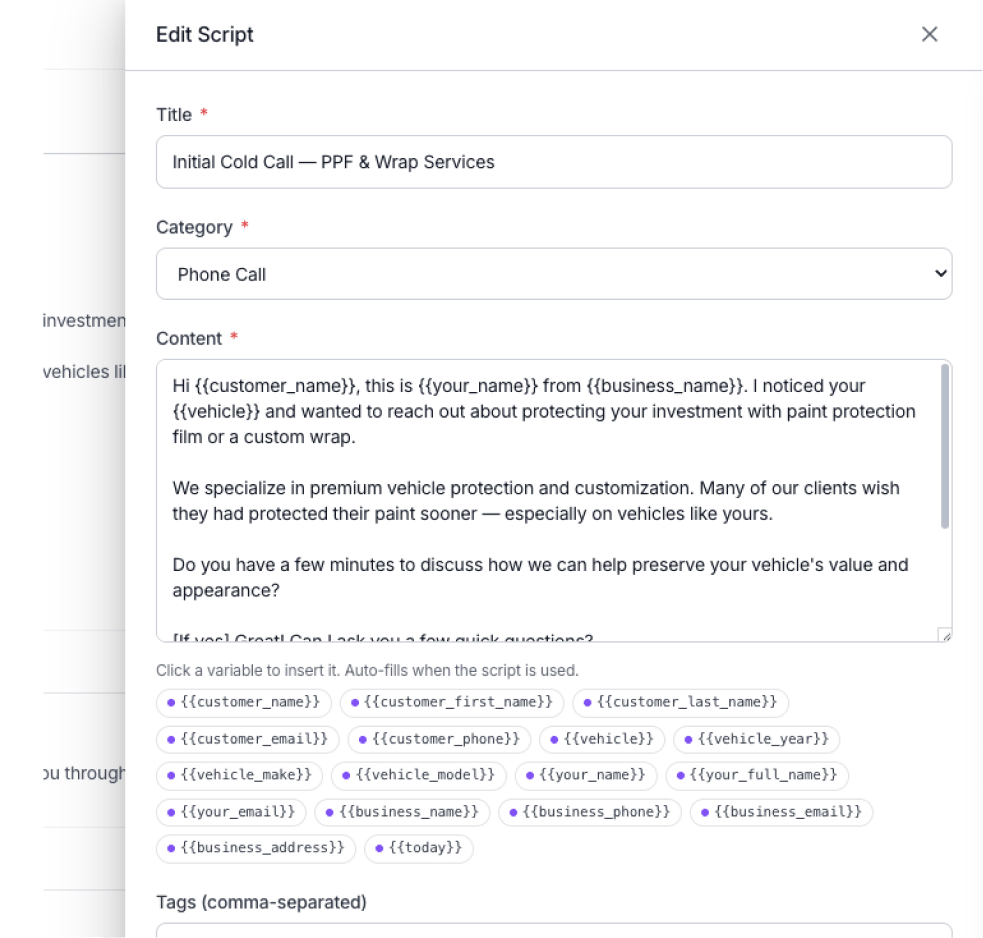
The cadence only works if it happens — and busy weeks are when it does not. That is the case for wiring it into automations so the touches fire whether or not anyone remembers. It is the single cheapest fix in the closing problem.