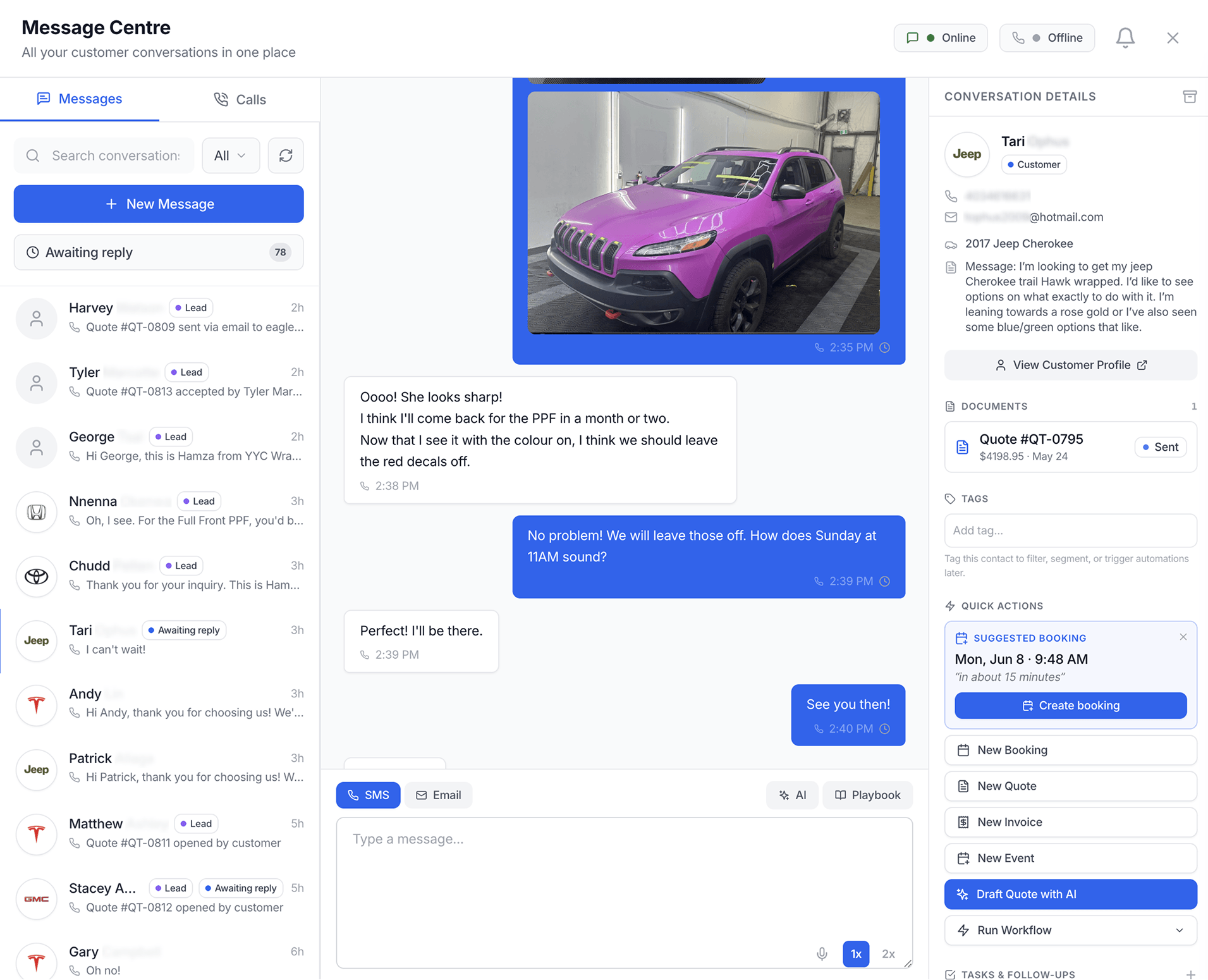
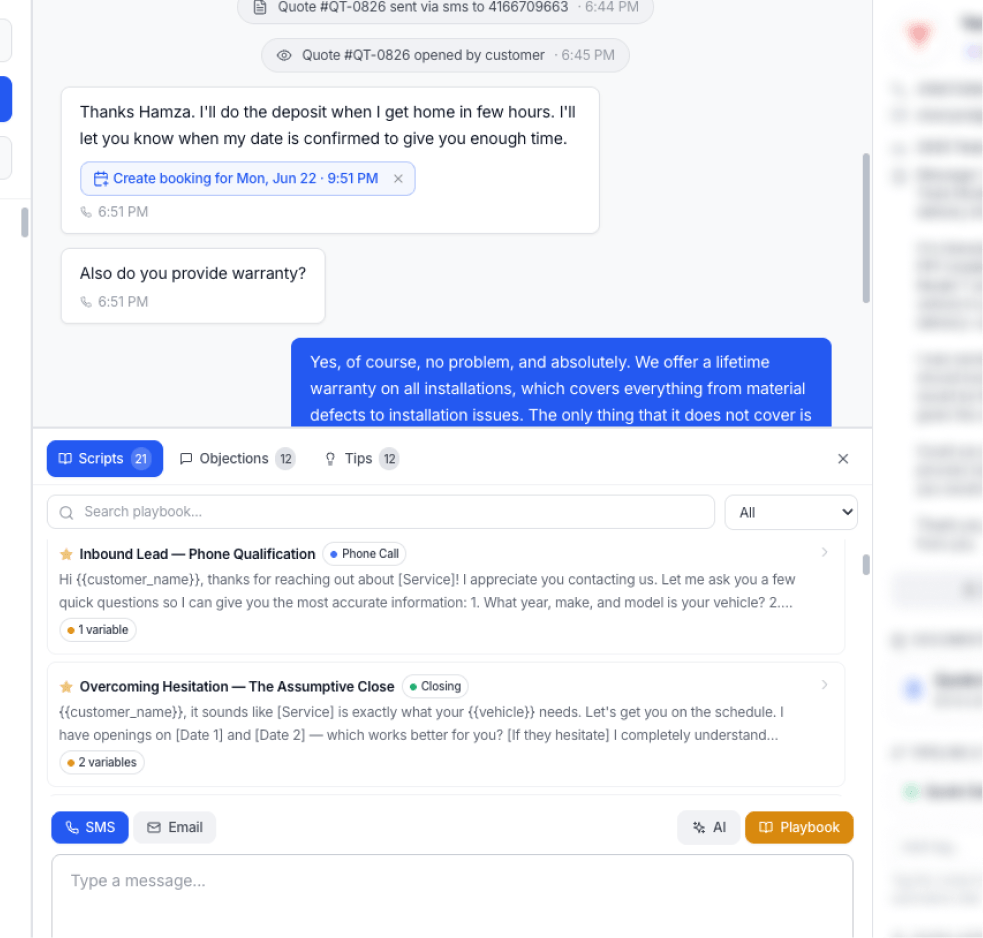
The fix for DM chaos is not discipline. It is plumbing: every channel flowing into one inbox, where every conversation has a status, an owner and a next step. Shops rarely lose deals because someone said the wrong thing — they lose them because nobody said anything, in an app nobody was watching.
Where do shop leads actually come from?
Everywhere, which is the problem: Instagram DMs, the website form, texts to the shop number, missed calls, Facebook messages, Google Business Profile chats. Each lives in a different app, with different notifications, on different phones. Every one of them is a lead — and none of them know about each other.
Why do scattered channels kill deals?
Because a message thread is not a sales tool. It has no status — you cannot see "quoted, waiting" in a DM list. It has no owner — everyone assumes someone else replied. It has no memory — when a staff member leaves, the conversations leave with their phone. And a missed call is worse: it is not even a thread. It is nothing.
A DM thread has no status, no owner and no next step.
What does "one inbox" actually mean?
- Every channel, one stream. DMs, texts, forms, emails and missed calls land in the same place, sorted by who is waiting.
- Every conversation on a record. The thread is attached to the customer and their spot in the pipeline — not to whoever’s phone buzzed.
- An owner on every lead. Someone’s name is on it, so "I thought you had it" stops being a way deals die.
- Missed calls become leads. Logged, text-back sent, follow-up queued — automatically.
Every conversation, one command center.
Wrapstart pulls texts, emails, DMs and calls onto the customer record — one inbox for the whole shop, with nothing living on personal phones.
See Customer Management →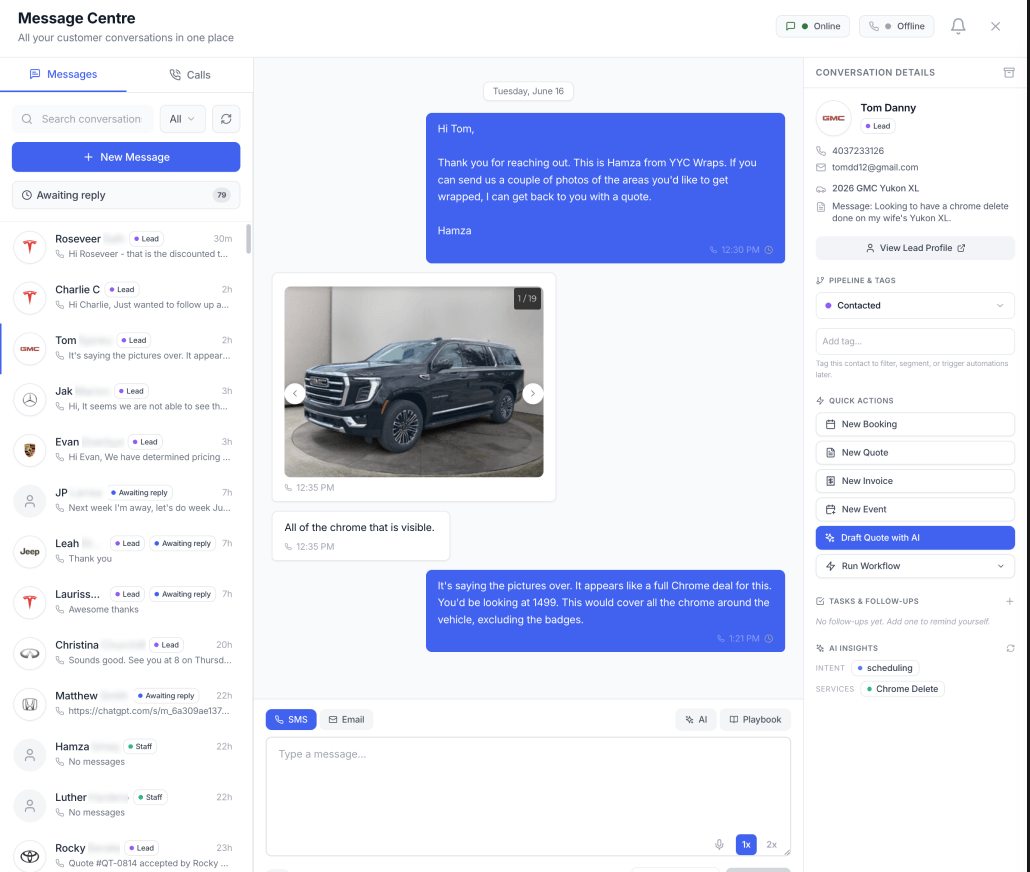
Once everything lands in one place, the other fixes get easy: replying in minutes is possible because there is one list to watch, and follow-up runs on statuses instead of memory.