Ask five shops to price the same full wrap and you'll get five numbers — sometimes thousands apart. Not because their costs are different, but because most of those numbers weren't built from costs at all. They were a feel: what the last job went for, what the shop across town charges, what the customer sounded like they'd say yes to.
Feel works until it doesn't. Underprice and you work a full week for margin that disappears into offcuts and redos. Overprice with no story behind the number and you lose the job to whoever guessed lower. The fix is the same either way: build the price from the cost stack, every time.
The cost stack behind every wrap price
- Material — including waste. You don't pay for the vinyl on the car; you pay for the vinyl that leaves the shelf. Offcuts, bad pulls, compound curves and redos are real material cost. If you're not pricing waste in, you're donating it.
- Labor at your real install speed. Not your best day — the honest average of prep, install and cleanup, in square feet per hour.
- Overhead. Rent, insurance, software, the lights. Every booked hour has to carry its share.
- Margin — set on purpose. Profit is a number you choose up front, not whatever survives the job.
Profit isn't what's left over. It's a line item.
The mistakes that quietly eat the job
The pattern repeats everywhere: a shop prices off a competitor's Instagram, forgets that a chunk of every roll never makes it onto a car, and treats profit as leftovers. The quote wins the job — and the job loses money. Being booked solid at the wrong price isn't growth. It's the most expensive way to stay busy.
Run your real numbers — free
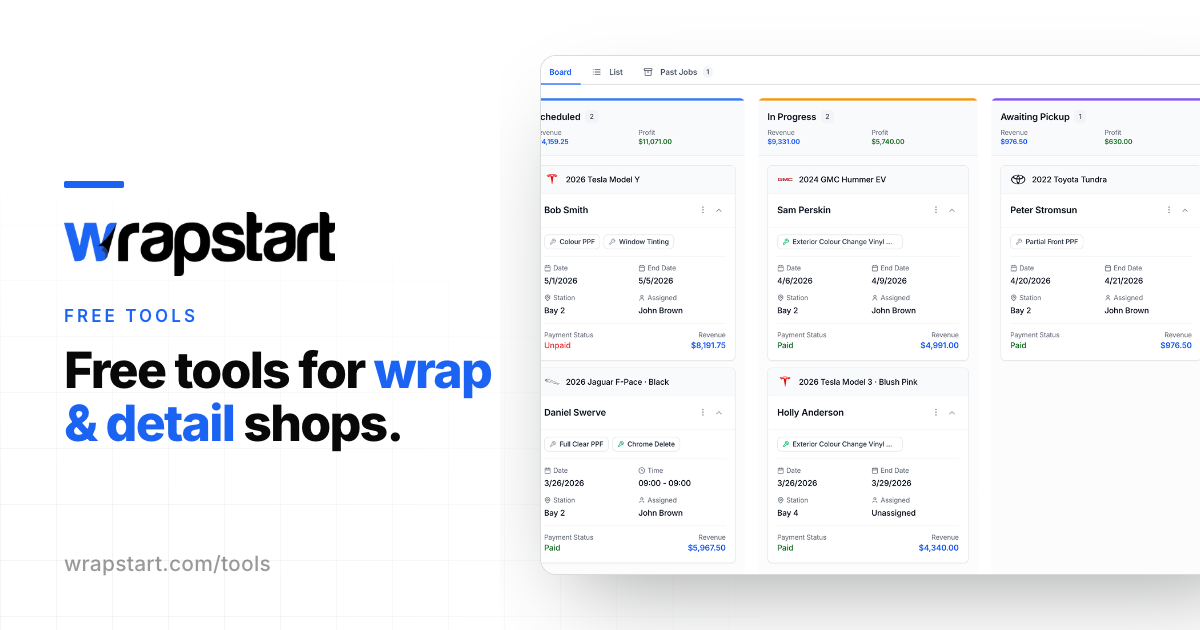
We built a free wrap pricing calculator that does the math properly. Enter the coverage, your material cost, waste, install speed, hourly rate and target margin — it hands back a suggested price with the full cost breakdown, so you can see where every dollar goes. No signup, no watermark, runs in your browser.
The defaults are honest starting points — 15% waste, 20 sq ft an hour, $75/hr — but the whole point is to replace them with your numbers. Ten minutes with last month's jobs will tell you what they really are.
Price the next job from costs, not vibes.
The wrap pricing calculator builds your price from material, waste, labor, overhead and margin — with a breakdown you can defend to any customer.
Open the calculator →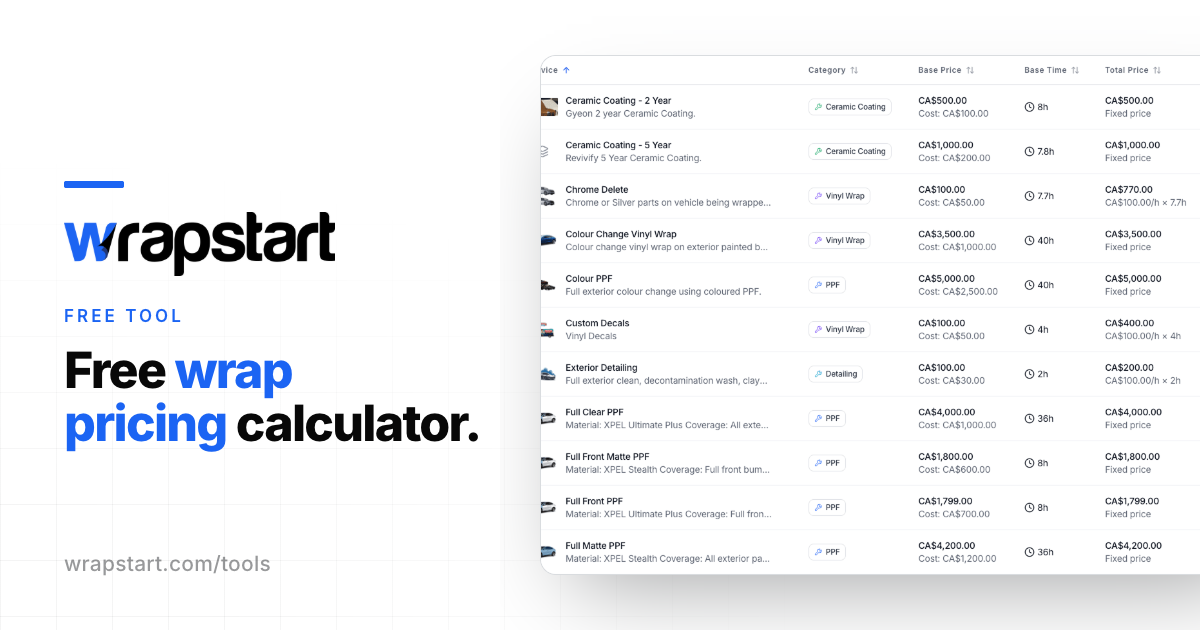
Then put the price to work
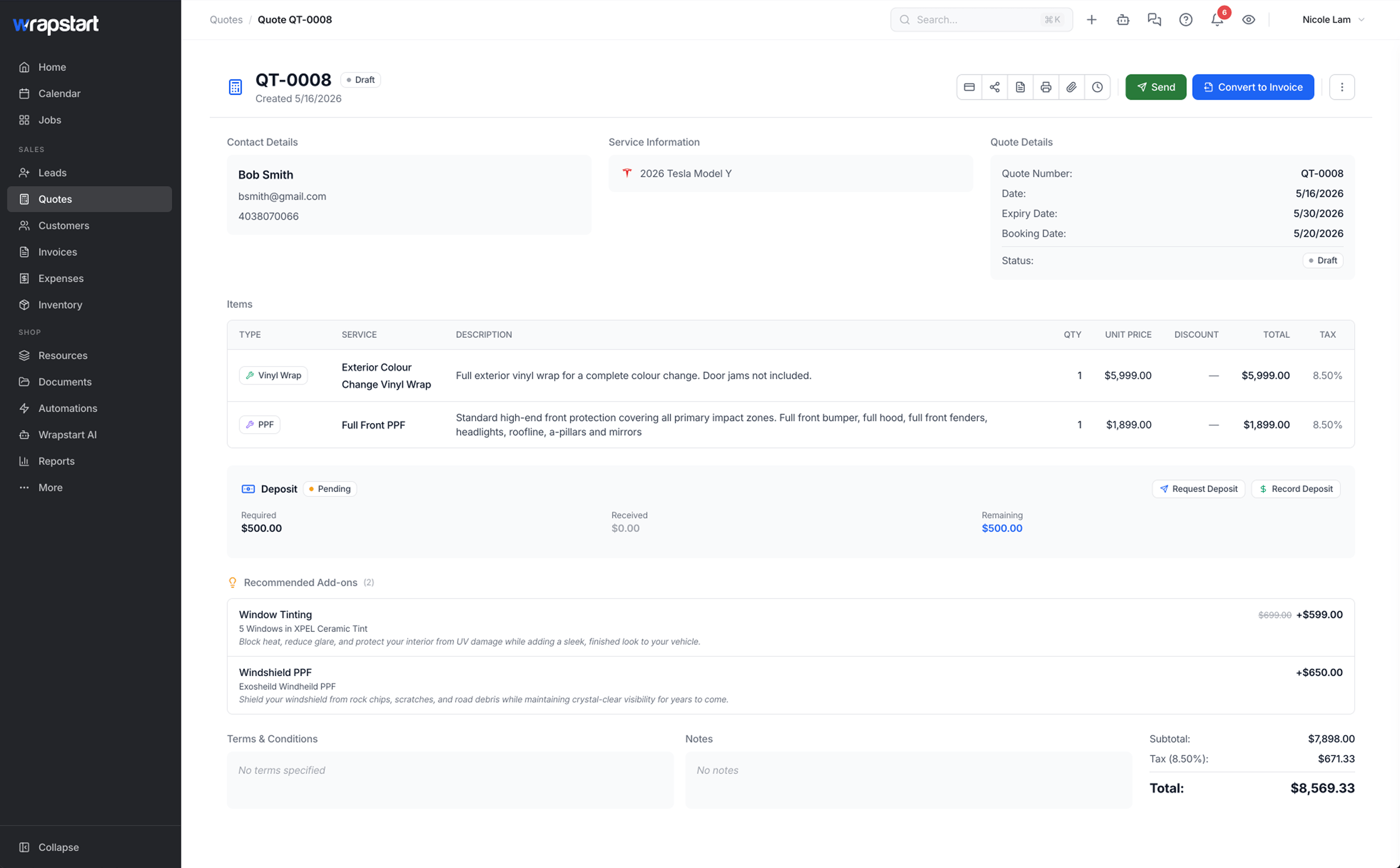
A defensible price is step one. Getting it onto a quote the customer can accept — with a deposit collected — is step two. That's what Quotes & InvoicingInteractive Proposals in Wrapstart is for: services priced once, quoted consistently, and followed up automatically so the number you worked out becomes a booked job.